
As AI large model computing infrastructure accelerates across the industry, with 800G achieving large-scale deployment and 1.6T entering mass commercialization, the power consumption of high-speed optical modules continues to surpass the physical limits of air-cooling. Liquid-cooled optical modules have been upgraded from customized optional solutions to standard products for high-end AI data centers, becoming a critical necessity in computing network construction. Leveraging the superior heat transfer coefficient of liquid, these modules address key challenges such as frequency throttling and rising bit error rates caused by extreme heat in ultra-high-bandwidth devices.

I. Definition and Mainstream Technical Solutions of Liquid-Cooled Optical Modules
Liquid-cooled optical modules are specialized optical interconnect devices developed for high-density AI computing clusters. They use coolant to directly dissipate heat from core components such as DSPs and EML lasers, achieving heat transfer efficiency more than three times that of conventional air cooling, enabling reliable continuous operation of high-power devices. Based on the overall thermal management architecture of data centers, the industry has formed three mainstream technical approaches.
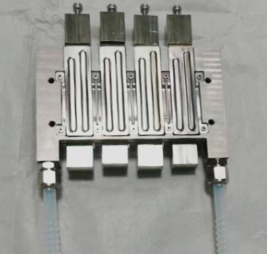
Approach 1: Cold Plate Contact Liquid Cooling
This is also the mainstream solution for 800G/1.6T pluggable modules. A fixed copper cold plate is integrated into the switch cage, and after the optical module is inserted, its housing makes tight contact with the cold plate. Internal circulating water cooling removes the heat. This approach has a low retrofit difficulty, is compatible with existing OSFP and QSFP-DD form factors, and suits the upgrade needs of existing data centers transitioning from air cooling to liquid cooling.
Approach 2: Module-Embedded Microchannel Liquid Cooling
Microchannels are pre-embedded inside the optical module housing, paired with quick-connect fluid couplings, allowing coolant to directly contact the heat-generating chips. The thermal dissipation limit per module exceeds 80W, making it compatible with XPO ultra-high-density optical modules. However, the sealing and leak-prevention manufacturing requirements are relatively demanding.
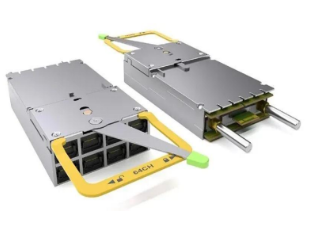
Approach 3: Full Immersion Liquid Cooling
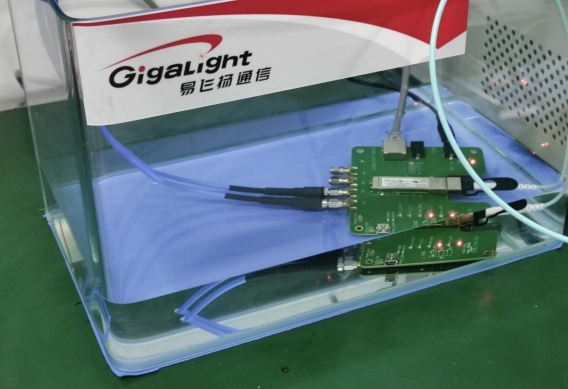
The entire optical module is submerged in fluorinated liquid, enabling uniform heat dissipation across all surfaces. It is suited for ultra-high-power single-rack AI clusters exceeding 60 kW. Small-scale pilot deployments have been conducted domestically, but the approach requires full rack retrofitting, resulting in high upfront infrastructure costs.
Compared to traditional air-cooled optical modules, liquid-cooled products significantly reduce operating temperatures, greatly lowering component aging and link bit error rates caused by excessive heat. They also help data centers achieve a PUE below 1.15, aligning with domestic energy consumption standards for new computing centers. In terms of product specifications, current liquid cooling retrofits prioritize 1.6T and above products, where heat flux density exceeds 100 W/cm² and air cooling is insufficient. The optimized LPO architecture brings 800G power consumption below 10W, allowing air cooling to remain viable in some mid-to-low-end scenarios, with liquid cooling reserved for high-end training clusters.
II. Current Industry Deployment Status
Global AI computing infrastructure investment continues to intensify, with overseas cloud providers and domestic AI data centers maintaining elevated capital expenditures. The explosive demand for high-speed, high-power optical modules is driving liquid cooling solutions from pilot deployments to large-scale commercial adoption.
On the supply side, a domestic-manufacturer-led industry structure has taken shape, with leading enterprises outpacing global peers in technology iteration and mass production. Innolight holds the top position in the global optical module industry, with over 40% global market share in 800G and 50%–70% in 1.6T. Its liquid-cooled 1.6T optical modules have achieved stable volume delivery, with mature cold plate integration manufacturing processes and deep compatibility with overseas high-end computing cluster requirements.
The industry standards ecosystem is also maturing, effectively resolving early challenges of non-standardization and poor compatibility. China’s ODCC has officially released the White Paper on Key Liquid Cooling Technologies for 800G/1.6T Optical Modules, unifying cold plate dimensions, contact methods, fluid interfaces, and sealing specifications for mainstream pluggable optical modules, providing a standards basis for retrofitting existing data centers and scaling up new ones. Meanwhile, leading industry players are jointly advancing frontier standards such as XPO ultra-high-density packaging and next-generation liquid cooling interfaces to accommodate 3.2T and above ultra-high-speed liquid-cooled optical modules, driving the industry’s upgrade from volume production toward standardization, normalization, and high reliability.
III. Existing Industry Development Challenges
Despite the positive industry momentum, the widespread adoption of liquid-cooled optical modules remains constrained by several bottlenecks.
Sealing and leakage reliability: The plug-in connectors for embedded microchannel liquid cooling modules require high precision, and the risk of leakage under long-term thermal cycling is difficult to fully eliminate. Immersion solutions also require all module components to be modified for resistance to fluorinated liquid immersion, increasing material costs by more than 20%.
High supply chain costs: Domestic production rates for thermal components such as copper cold plates, quick-connect fluid couplings, and specialized sealants remain insufficient, with high-end accessories dependent on imports. Liquid-cooled optical modules carry a 25%–40% price premium over air-cooled equivalents at the same speed, limiting adoption rates among small and mid-sized computing centers.
Packaging compatibility conflicts: Traditional QSFP-DD and OSFP cage spaces are compact, leaving insufficient structural room after cold plate installation. The high cost of large-scale retrofitting of existing switches constrains the upgrade pace of legacy data centers.
IV. Core Future Industry Development Trends
Continuous product speed upgrades, with liquid cooling becoming standard for 3.2T: As single-channel 400G electro-optical devices are developed and commercialized, full-scale R&D of 3.2T optical modules has launched. Product power consumption will exceed 60W, at which point air cooling will be entirely replaced by liquid cooling.
Deep coupling of silicon photonics, CPO, and liquid cooling: After co-packaged optics (CPO) and silicon photonics technologies are integrated, local heat flux density multiplies, necessitating embedded microchannel liquid cooling. Within the next 2–3 years, liquid cooling designs are expected to be completed concurrently during the optical engine packaging stage, achieving native thermal optimization.
Accelerating domestic substitution with declining costs: Domestic enterprises in precision copper processing and sealing components are accelerating technology breakthroughs, gradually increasing the domestic production rate of cold plates, fluid couplings, and other components. By 2027, the price gap between liquid-cooled and air-cooled products is expected to narrow to within 10%, and the domestic liquid-cooled optical module market is projected to exceed 10 billion RMB. Additionally, low-power technologies such as LPO will give rise to lightweight semi-liquid-cooled solutions suited for mid-to-low-end data centers.
Gradual scaling of immersion liquid cooling: In the short term, cold plate contact cooling remains dominant. Over the medium to long term, full immersion liquid cooling will accelerate penetration owing to its superior thermal efficiency, shifting data centers from single-point liquid cooling to full-link liquid cooling. Driven by green computing policies, the liquid-cooled optical module industry is expected to enter a high-growth cycle lasting more than five years, with a compound annual growth rate exceeding 50%.
Conclusion
AI computing demand is reshaping the optical communications industry, and the transition of liquid-cooled optical modules from customized to standardized products has become a clear trend. In the short term, 800G/1.6T liquid-cooled products will continue to scale in volume. Over the medium to long term, silicon photonics, CPO, and advanced packaging technologies will drive liquid cooling to become standard across all 3.2T and higher speed products. As domestic substitution reduces costs, liquid-cooled optical modules are poised to become the universal form factor for data communications optical modules, with deep benefits from global computing infrastructure buildout.