
GIGALIGHT adopts C-band parallel DWDM optical devices to define a private-network-grade AWGR all-optical switching solution
April 2, 2026, Shenzhen, China. – The rapid growth of AI computing power is bringing the concept of low-latency optical switches back into focus. Leveraging its independently developed 100G QSFP28 PSM DWDM4 optical modules and universal C-band AWGR (Arrayed Waveguide Grating) routers, GIGALIGHT has defined and launched a fixed C-band DWDM-AWGR all-optical wavelength switching solution. The solution has completed proof-of-concept validation and comprehensive parameter testing in the laboratory. It is designed to support the migration of private networks—such as campus networks and power grids—toward nanosecond-level optical switching infrastructure.
I. Function and Working Principle of the AWGR Router
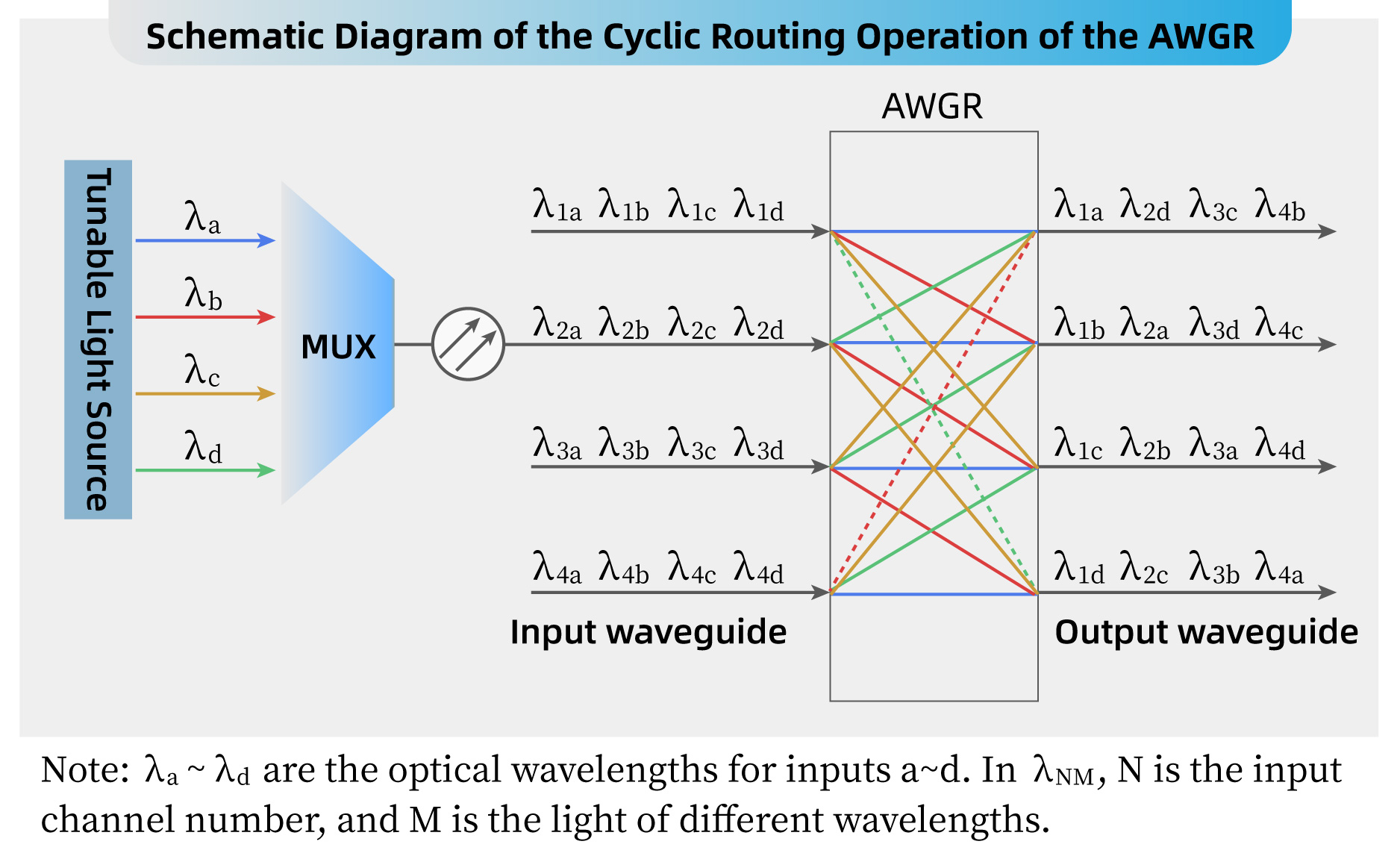
An AWGR (Arrayed Waveguide Grating Router) is an active optical routing device based on planar lightwave circuit (PLC) technology. Its core capability lies in cyclic wavelength routing: an optical signal entering input port i with wavelength λ_j is deterministically routed to output port (i + j) mod N, without any electrical-layer switching. This property enables an N×N AWGR to simultaneously support up to N² independent, non-blocking optical paths, making it a key building block for optical switching matrices.
Unlike a static AWG (used only for multiplexing/demultiplexing), an AWGR features specially designed arrayed waveguide phase responses that enable cyclic routing. Its optical characteristics can be dynamically tuned via thermo-optic or electro-optic effects, allowing control over the output paths of different wavelengths.
The AWGR structure consists of:
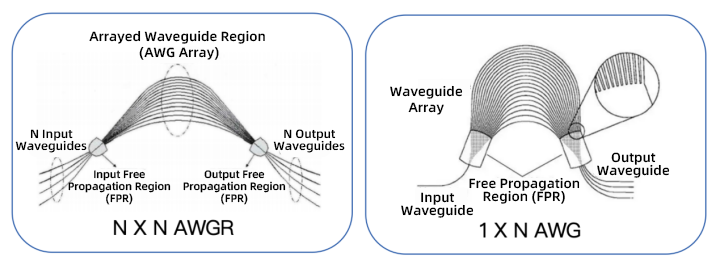
N input waveguides, an input free propagation region (star coupler), an arrayed waveguide region (with uniform path-length differences for phase delay), an output free propagation region, and N output waveguides.
Comparison between AWGR and conventional AWG structures:

Schematic Diagram of the Cyclic Routing Operation of the AWGR:

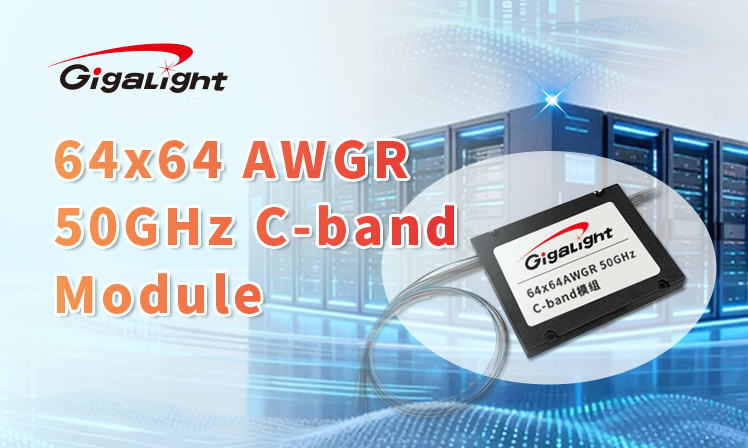
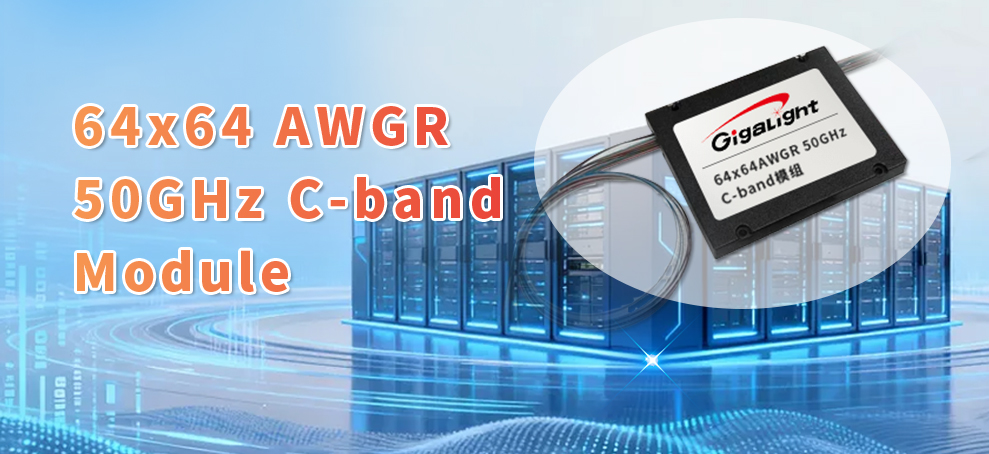
II. GIGALIGHT 50GHz C-Band 64×64 AWGR Passive Device Introduction

GIGALIGHT’s 50GHz C-band Gaussian-type 64×64 AWGR provides 64 input ports and 64 output ports. It features a typical insertion loss of 8 dB, high channel isolation up to 35 dB, and extremely low polarization-dependent loss (PDL ≤ 0.5 dB), ensuring clean and stable signal transmission. The device supports an operating temperature range of -5°C to 65°C and is available in standard 2U rack-mount packaging or other form factors for easy deployment and maintenance.
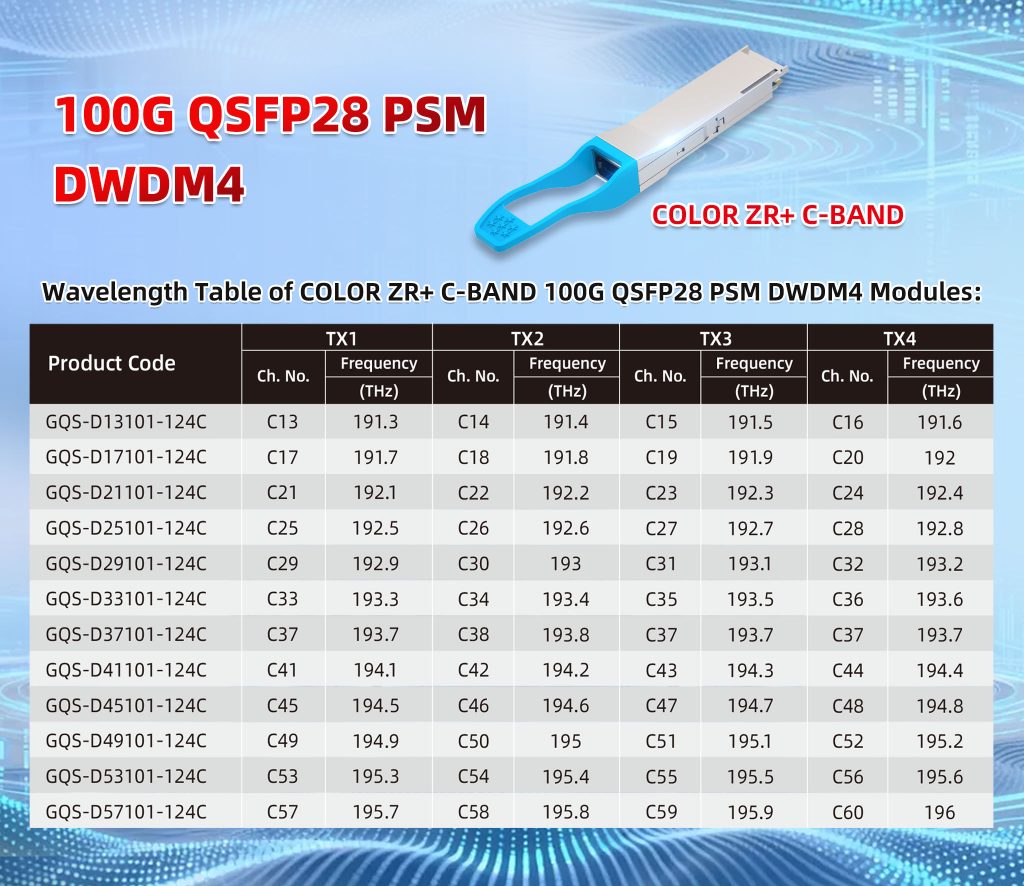
III. 100G QSFP28 PSM DWDM4 C-Band Product Introduction

GIGALIGHT’s 100G QSFP28 PSM DWDM4 (Parallel Single-Mode, 4-channel DWDM) optical module supports 48 channels in the C-band with 100 GHz spacing. Each module integrates four EML lasers operating at different DWDM wavelengths, with each channel running at 25G NRZ. The optical interface uses an MPO-12 connector, and total power consumption is less than 5W.
When used with external DWDM MUX/DEMUX, the total bandwidth can reach up to 1200G over dual-fiber transmission. The module can be directly inserted into standard 100G QSFP28 switch ports, eliminating the need for traditional DWDM electrical-layer equipment.
Key Differences Between GIGALIGHT’s C-Band Parallel DWDM-AWGR Matrix and Traditional Switching Matrices
1. Tunable DWDM Module + AWGR:
By combining tunable DWDM optical modules with AWGR devices, a fully optical switching matrix with dynamically reconfigurable channels can be achieved. Service paths can be switched automatically by adjusting wavelengths, without manual intervention.
2. Non-tunable Parallel DWDM Module + AWGR:
Using fixed-wavelength parallel DWDM modules with AWGR results in a non-reconfigurable optical interconnect matrix. Service switching requires manual reconfiguration, as wavelengths are fixed.
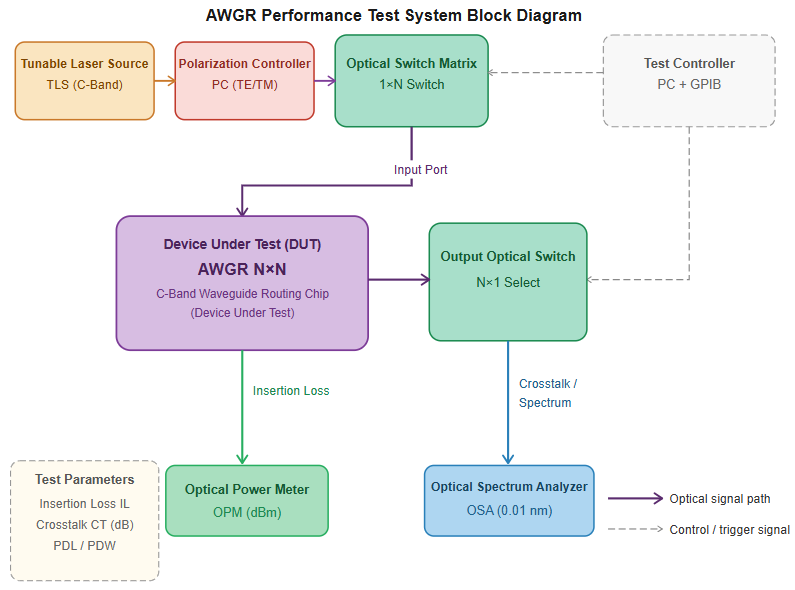
IV. AWGR Test Setup
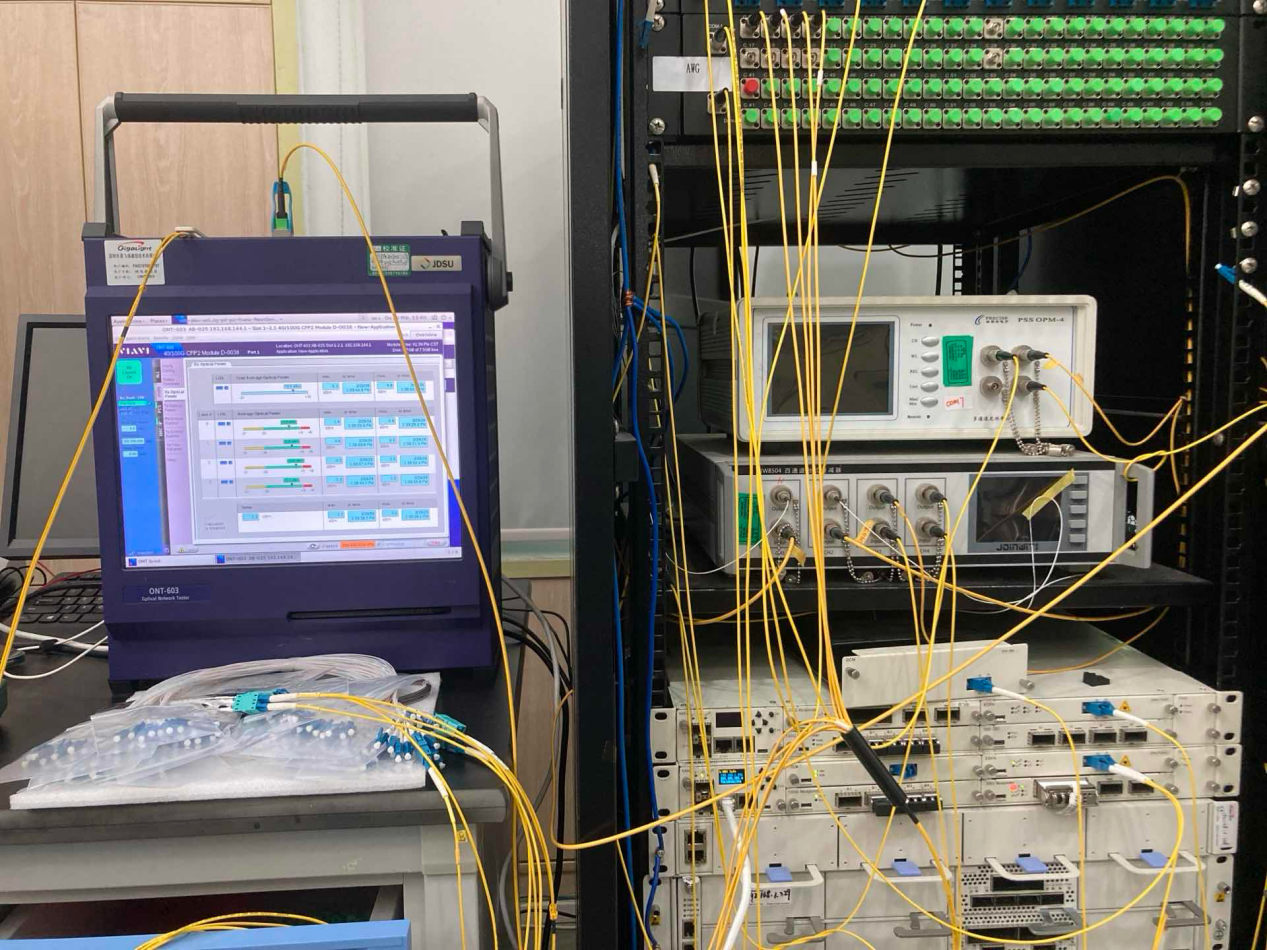
AWGR testing focuses on validating key parameters such as insertion loss, crosstalk, polarization-dependent loss (PDL), and polarization-dependent wavelength (PDW). The test system typically includes a tunable laser source, polarization controller, optical switch matrix, optical power meter, and optical spectrum analyzer.


In system-level testing of the 50GHz C-band 64×64 AWGR with 100G QSFP28 PSM DWDM4 modules, EDFAs are introduced to compensate for AWGR insertion loss.
V. AWGR Application in Campus Networks
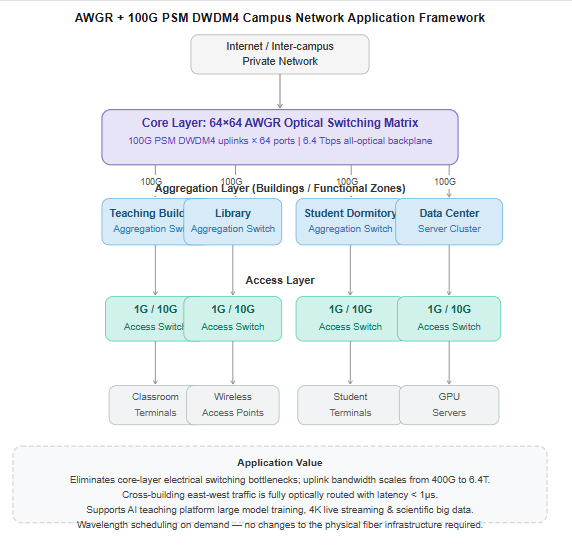
In campus networks, AWGRs are deployed at the core layer to replace large electrical switching matrices. Each building or functional area is equipped with 100G QSFP28 PSM DWDM4 modules. Using four fixed C-band wavelengths, direct optical interconnection is achieved through the AWGR at the aggregation layer.
This architecture reduces O-E-O conversion stages, lowers latency and power consumption, and—together with EDFAs—compensates for insertion loss.
Schematic Block Diagram of Campus Network Application:

VI. AWGR Application in Power Networks
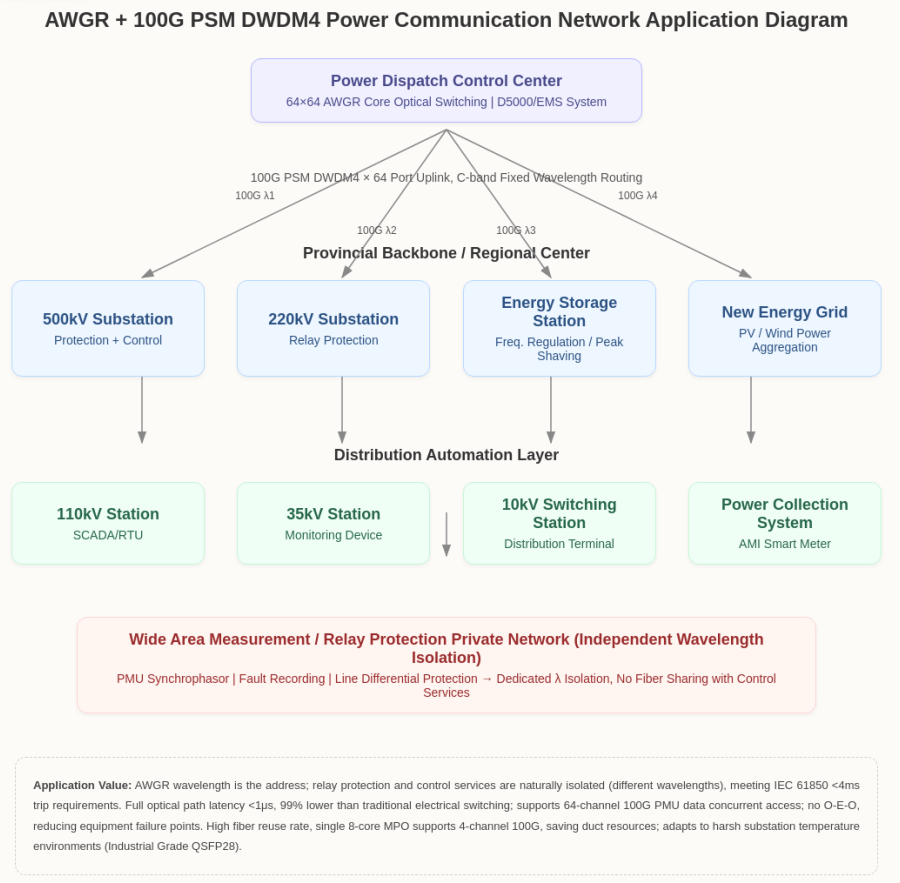
Power communication networks require extremely stringent performance: millisecond-level latency, ultra-high reliability, and stable operation under strong electromagnetic interference (EMI). AWGR’s all-optical routing is inherently suitable for substation and dispatch center fiber networks.
Combined with 100G PSM DWDM4, multiple services—such as teleprotection, PMU monitoring, video surveillance, and management data—can be transmitted simultaneously over the same fiber. EDFAs are also used to compensate for AWGR insertion loss.
Power Network Application Schematic Block Diagram:

VII. Comprehensive Evaluation of the AWGR Solution
Advantages:
The combination of 100G PSM DWDM4 and AWGR tightly integrates multi-wavelength optical outputs with cyclic routing capabilities. Each QSFP28 port directly transmits four fixed C-band wavelengths (via external DWDM MUX), resulting in a simple architecture capable of supporting up to 10 km transmission with EDFA assistance.
AWGR eliminates multiple O-E-O conversions found in traditional electrical switching systems, reducing node-to-node latency to near the speed of light (well below 1 μs forwarding delay). This is especially valuable for teleprotection in power systems and east-west traffic in data centers.
In campus networks, AWGR enables a flattened architecture, replacing multi-layer aggregation switches. A single AWGR can provide full 100G interconnection across buildings, significantly reducing total cost of ownership (TCO) and power consumption.
In power networks, DWDM channel-level physical isolation naturally meets strict teleprotection requirements, while optical fiber transmission is immune to EMI.
Limitations:
The primary challenge lies in wavelength management complexity. Due to the cyclic routing nature of AWGR, wavelength allocation across nodes must be carefully planned. Network scaling (e.g., from 8×8 to 64×64 or larger) requires reconfiguration of wavelength plans and appropriate AWGR sizing, making it less flexible than purely electrical switching architectures.
Conclusion:
This solution is best suited for large-scale campus backbone networks and power private networks with stable topologies, strict latency and power requirements, and professional optical network operation capabilities. It is not recommended for small- to medium-sized networks with frequent topology changes or dynamic scaling needs.
About GIGALIGHT
As an open optical networking explorer, GIGALIGHT integrates the design, manufacturing, and sales of both active and passive optical devices and subsystems. The company’s product portfolio includes III-V optical modules, silicon photonics modules and silicon-based NPO/CPO engines, liquid-cooled optical modules, passive optical components, Active Optical Cables (AOCs), Direct Attach Cables (DACs), coherent optical communication modules, OPEN DCI BOX subsystems based on coherent and O-band DWDM optical modules, and UHD SDI video optical transceivers. GIGALIGHT focuses on applications including AI data centers, 5G transport networks, metropolitan WDM transmission, and ultra-HD broadcast and video, positioning itself as an innovative designer of high-speed optical interconnect hardware solutions.